
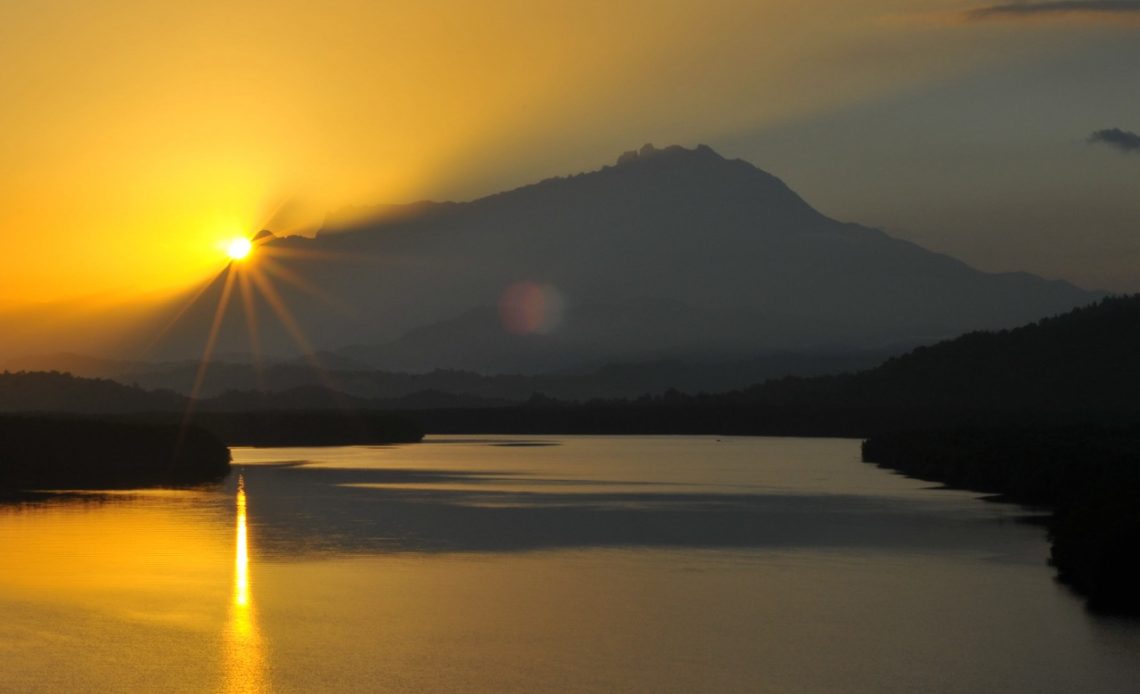
Mount Kinabalu dominates Sabah’s skyline from almost every angle, its granite summit visible from as far as Kota Kinabalu on a clear day. At 4,095 metres, it’s the highest peak between the Himalayas and New Guinea, and one of the very few mountains of this altitude that a reasonably fit person with no technical climbing experience can summit — provided they respect the terrain, the altitude, and the preparation it demands.
The Two-Day Structure
Almost every Kinabalu climb follows the same basic shape: day one covers roughly 6 kilometres from Timpohon Gate up to Laban Rata, a rest station at around 3,270 metres, gaining close to 1,300 metres of elevation through shifting forest zones — lowland rainforest giving way to moss forest, then increasingly stunted, wind-sculpted vegetation. Climbers overnight at Laban Rata before a pre-dawn start, usually around 2 to 2:30am, for the final push to the summit in time for sunrise.
That final stretch, roughly 2.7 kilometres, is the hardest section by far — steep granite slabs, fixed ropes, thinning air, and near-freezing pre-dawn temperatures after the tropical heat of the lower slopes. Many first-time climbers underestimate this contrast and don’t pack adequately for the cold at altitude.
Permits and Guides
Climbing Kinabalu independently isn’t an option — every climber must be accompanied by a licensed mountain guide, and daily climber numbers are capped by Sabah Parks to manage environmental impact and trail congestion. This means booking well in advance, particularly during peak season (roughly March to August), when permits can sell out weeks ahead.
Fitness, Not Technical Skill
Kinabalu doesn’t require ropework or climbing experience, but it does demand genuine cardiovascular fitness and mental resilience. Altitude affects people unpredictably regardless of general fitness level — some strong hikers struggle above 3,000 metres while less conditioned climbers sail through. Acclimatisation isn’t really possible on a two-day itinerary, so a slow, steady pace and good hydration matter more than raw speed.
A reasonable minimum preparation is being comfortable with several hours of continuous hiking on uneven terrain, ideally with some hill or stair training beforehand.
What Makes It Worth the Effort
Sunrise from near the summit, watching the shadow of the mountain stretch out across Sabah as the sky changes colour, is the payoff most climbers remember above all else. Kinabalu also sits within Kinabalu Park, a UNESCO World Heritage Site recognised for exceptional biodiversity — home to more plant species than the whole of North America, including several species of the parasitic Rafflesia and carnivorous pitcher plants found on the mountain’s slopes and nowhere else.
Practical Notes
Pack layers — shorts and a t-shirt for the lower forest, thermal layers and a windproof shell for the summit push. Headlamps are essential for the pre-dawn ascent. Trekking poles help significantly on the descent, which is harder on the knees than most climbers expect. And book both the climbing permit and Laban Rata accommodation together, since they’re managed as a single package by authorised operators.


