
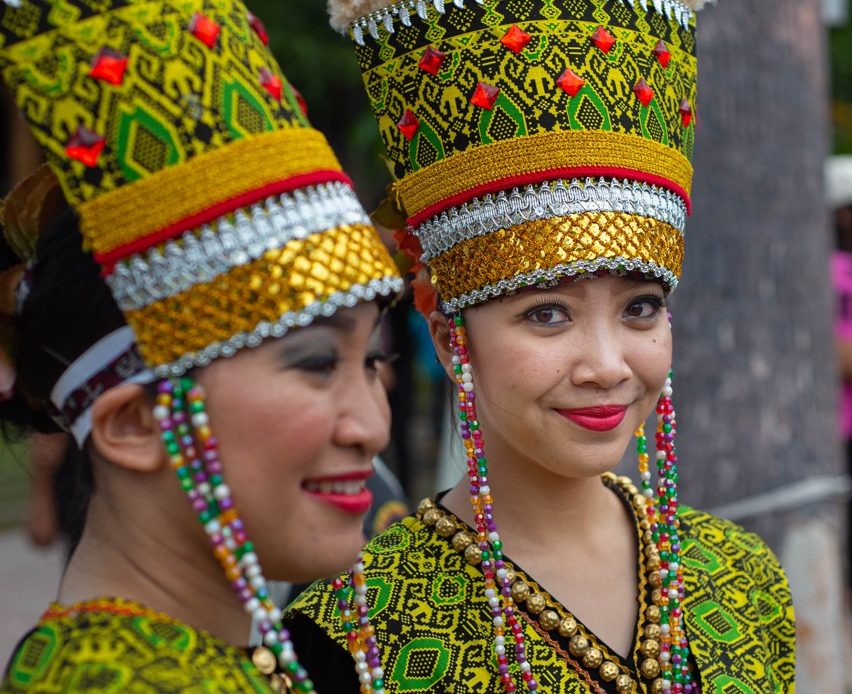
The Kadazan-Dusun are Sabah’s largest indigenous group, and for most visitors, the culture is first encountered through Kaamatan, the annual harvest festival every May. But Kaamatan is really the visible peak of a much deeper, older culture that continues quietly throughout the rest of the year, particularly across Sabah’s interior districts like Penampang, Tambunan, Ranau, and the Crocker Range foothills.
A Culture Rooted in Rice
Traditional Kadazan-Dusun life has historically centred on wet rice cultivation, and much of the community’s belief system reflects that dependence. Bambaazon, the rice spirit, sits at the heart of traditional cosmology — the belief that rice possesses a spirit that must be honoured through ritual at each stage of cultivation, from planting to harvest. Kaamatan itself is essentially a thanksgiving to Bambaazon, but the smaller rituals surrounding planting and early growth happen throughout the agricultural calendar with far less fanfare, often known only within individual villages.
The Bobohizan
Central to traditional Kadazan-Dusun spiritual life is the bobohizan, a ritual specialist and spiritual leader — almost always a woman — responsible for conducting ceremonies, healing rites, and maintaining oral tradition. The role is passed down through apprenticeship rather than formal training, and practising bobohizan have become increasingly rare as Christianity became the dominant religion across much of the community over the past century. Where bobohizan traditions continue, particularly during Kaamatan’s Unduk Ngadau-adjacent ceremonies, they represent a direct living link to pre-colonial Sabah.
Language and Its Many Dialects
“Kadazan-Dusun” itself is something of an umbrella term, covering related but distinct dialects spoken across different districts — differences significant enough that speakers from Penampang and speakers from Ranau may struggle to fully understand each other’s dialect despite sharing broad cultural roots. This linguistic diversity reflects Sabah’s interior geography: valleys and mountain ranges historically kept communities relatively separated, allowing dialects and local customs to diverge over generations.
Craft and Daily Material Culture
Traditional Kadazan-Dusun material culture includes woven rattan basketry (wakid, used for carrying goods on the back), beadwork incorporated into ceremonial dress, and the sompoton — a distinctive mouth organ made from a dried gourd and bamboo pipes, still played at cultural events and increasingly taught to younger generations as part of heritage preservation efforts.
Where Visitors Can Engage Respectfully
Cultural villages such as Mari Mari near Kota Kinabalu offer a structured introduction to Kadazan-Dusun customs alongside Sabah’s other indigenous groups, but travellers interested in a deeper picture are often better served visiting the interior districts directly — Tambunan and Ranau in particular retain strong traditional village life — ideally through a guide with genuine community connections, rather than treating cultural practice as a purely visual spectacle.


